Rating: ⭐⭐⭐⭐☆ (4/5)
Published by Rupa Publications, 2026 | 184 pages
In Folktales, Myths and Legends from the Deccan, Nitin Kushalappa assembles an engaging collection of folk narratives, myths and oral epics drawn from the vast cultural landscape of South India and the Deccan region. Bringing together traditions rooted in Kannada, Tulu, Kodava, Tamil, Telugu and Malayalam cultures, the book serves both as a compelling anthology and a meaningful preservation of regional storytelling traditions. Instead of reshaping these tales into glossy modern mythological fiction, Kushalappa retains their rawness, spiritual texture and oral storytelling cadence.
The anthology begins with “The Epic of Junjappa,” a powerful folk tale from Karnataka centred around a cowherd hero who eventually becomes a revered deity. The narrative moves through prophecies, miracles, family conflict and social tensions while remaining firmly grounded in local customs and belief systems. Junjappa’s transformation from mortal to divine figure reflects the way communities immortalize folk heroes through collective memory and devotion.
Equally memorable is “The Warrior Who Mastered Magic,” inspired by the Kodava legend of Kalyat Ponnappa. Combining elements of heroism, mysticism and political conflict, the story unfolds like a tragic ballad. Kushalappa paints Kodagu vividly through descriptions of its warrior clans, forests, spiritual traditions and martial culture. The result is a narrative that feels epic in scale yet emotionally intimate in its portrayal of sacrifice and destiny.
“Myths were told to explain the origins of gods, communities, certain social customs or natural phenomena.”
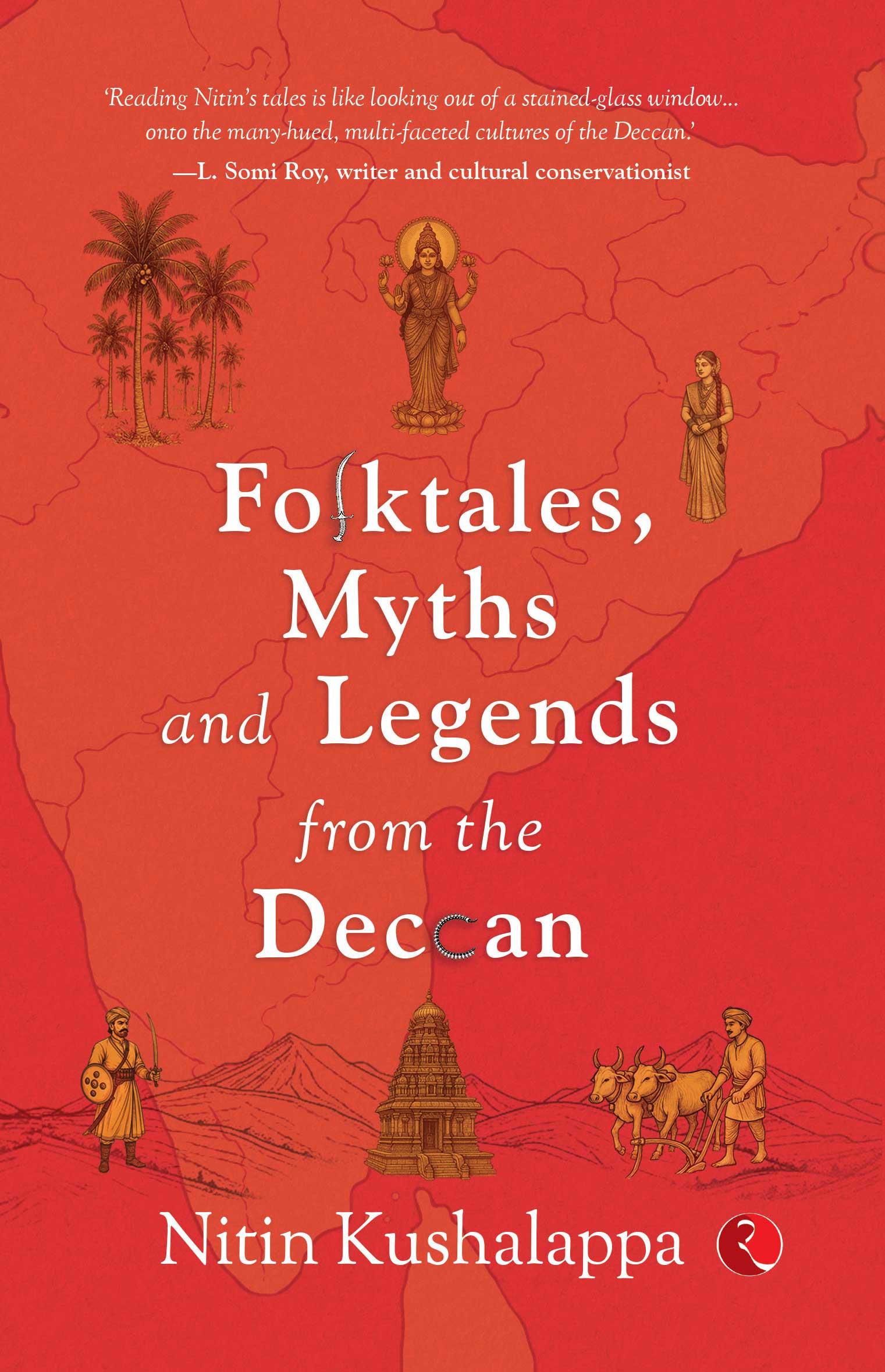
Pic Credit: Rupa Publications
A vibrant collection of oral traditions
The true strength of the book lies in the range of stories and perspectives it presents. From the celebrated Tulu folk heroes Koti and Chennayya to philosophical tales from the Nilgiris and romantic legends from Chhattisgarh, the collection explores themes that continue to resonate deeply—love, caste, faith, betrayal, grief, honour and resistance.
Notably, the stories retain their darker and more complex aspects. Kushalappa does not dilute the violence, superstition or social inequalities embedded within these traditions. This honesty lends authenticity to the narratives and highlights how folklore often acted as a voice for marginalized communities and collective social memory.
“The stories revolve around themes that are both timeless and universal: family; love—romantic, tragic and forbidden; death—mortality and grief; faith—hope and religion; power—its strength, fragility and misuse.”
Accessible scholarship and storytelling
The author’s note offers useful context for readers unfamiliar with Indian folk traditions. Kushalappa explains the distinctions between myths, legends and folktales in a simple and approachable manner while also outlining the historical and cultural background of the regions represented in the anthology.
His prose remains deliberately straightforward throughout the collection. Rather than relying on decorative language, he focuses on recreating the rhythm and immediacy of oral narration. Although some passages may feel abrupt because of this simplicity, the storytelling never loses its authenticity or emotional force.
An important act of cultural preservation
At a time when many oral storytelling traditions are fading or being overshadowed by homogenized popular mythology, Folktales, Myths and Legends from the Deccan stands out as an important cultural document. The book preserves not just stories, but also the rituals, beliefs and social histories connected to them.
More than a collection of entertaining tales, the anthology becomes a reminder of the extraordinary diversity of India’s regional cultures and narrative traditions. Readers interested in folklore, mythology, oral history and cultural studies will find the book insightful and deeply rewarding.
Verdict
Folktales, Myths and Legends from the Deccan is a thoughtful and richly layered anthology that successfully captures the spirit of South India’s oral storytelling heritage. Through tales of warriors, deified heroes, lovers, spirits and rebels, Nitin Kushalappa revives traditions that continue to shape regional identities and cultural memory. The book is both an enjoyable read and a valuable contribution to the preservation of Indian folklore.