Gangs of Punjab: Guns, Greed, and Girlfriends goes far beyond the conventions of a typical crime chronicle. Through meticulous reporting, Jupinderjit Singh reconstructs the rise of organised crime in Punjab over nearly forty years, following the journeys of ten infamous gangsters, from Dimpy Chandbhan to Lawrence Bishnoi. Instead of presenting isolated criminal biographies, the book reveals how shifting social realities, political influence, policing failures, and changing cultural values combined to shape Punjab’s underworld.
Drawing on his extensive career as a crime journalist, Singh offers an insider’s perspective that balances factual investigation with human stories. Each chapter not only documents violent crimes and gang rivalries but also examines the broader environment that allowed these networks to flourish. The result is a work that is as much about the transformation of Punjab as it is about the individuals who became symbols of its criminal landscape.
The central question driving the narrative is introduced at the very beginning of the book: “Who are these young men? Why did they choose this path? Were they born criminals—or did we, as a society, fail them?”. This question establishes the book’s tone and purpose. Rather than glorifying gangsters or reducing them to one-dimensional villains, Singh challenges readers to consider the deeper social, economic, and institutional forces that can push ordinary individuals toward lives of violence and organised crime.
Rating: ⭐⭐⭐⭐☆ (4.7/5)
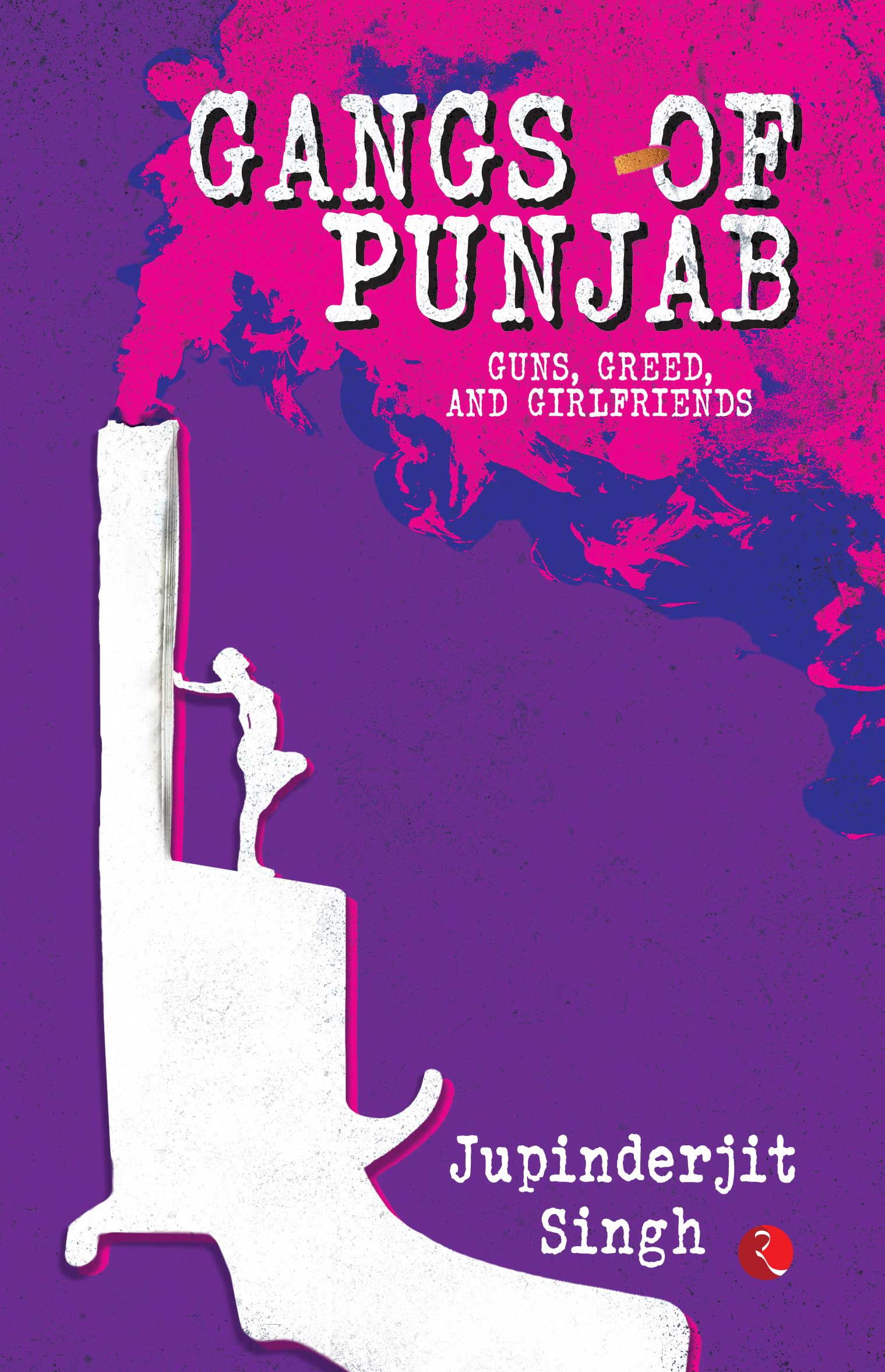
Central Theme of the Book
One of the book’s greatest strengths is that it refuses to reduce gangsters to caricatures. Singh observes that “None of them turned to crime out of hunger or poverty. They did it for power, for pride, for revenge—and sometimes, simply because no one stopped them.” This single sentence dismantles many popular myths surrounding organized crime and becomes the central argument running through the entire narrative.
One of the book’s greatest strengths lies in the depth and rigor of its investigative journalism. Rather than relying on hearsay or sensational storytelling, Jupinderjit Singh builds his narrative on years of firsthand reporting and extensive documentary evidence. His commitment to uncovering the truth is evident when he writes, “I believe journalism, at its core, should be a search for understanding.” This statement serves as the guiding principle for the entire work.
The book draws from a wide range of primary and secondary sources, including court proceedings, police dossiers, interrogation records, newspaper archives, and interviews with investigating officers, eyewitnesses, victims’ relatives, and former gang members. By weaving together these diverse perspectives, Singh presents a nuanced account that goes beyond documenting crimes to explain the circumstances surrounding them. The meticulous research not only enhances the authenticity of the narrative but also enables readers to appreciate the complex relationship between crime, law enforcement, politics, and society in Punjab.
Storytelling
Beyond its investigative depth, the book succeeds because of Jupinderjit Singh’s compelling storytelling. He has the ability to transform real-life events into narratives that are both gripping and historically significant without sacrificing factual accuracy. The opening chapter is a prime example of this approach. What begins with the tranquil setting of Chandigarh’s Sukhna Lake soon unfolds into one of Punjab’s most consequential gangland killings, instantly establishing the tension and stakes that define the rest of the book.
Through this dramatic introduction, readers are introduced to Dimpy Chandbhan, whom Singh identifies as “Numero Uno, the first in a long list of Punjab gangsters that followed.” Rather than serving as merely an attention-grabbing opening, the episode lays the foundation for understanding how organised crime gradually took root and evolved in Punjab. Singh’s narrative style combines the pace of a crime thriller with the discipline of investigative reporting, making even complex criminal histories engaging and accessible.
The Book’s Central Message
At its heart, Gangs of Punjab is less about gangsters than about the society that produces them. Jupinderjit Singh consistently argues that organised crime cannot be understood simply through police investigations or criminal trials. Instead, he invites readers to examine the broader social conditions that nurture violence and allow criminal networks to thrive.
Throughout the book, Singh suggests that the rise of many of Punjab’s most feared gangsters was shaped by a combination of broken institutions, political patronage, fractured family environments, limited educational opportunities, and the pursuit of status and quick wealth. By placing these factors alongside the stories of individual criminals, the narrative challenges the simplistic notion that gangsterism is solely the result of personal choice. The book ultimately serves as a reminder that preventing crime requires more than effective policing—it demands a deeper engagement with the social, political, and economic realities that influence the lives of vulnerable young people.
Humanising Criminals Without Glorifying Them
One of the book’s greatest achievements is its ability to portray its subjects as complex human beings without ever turning them into heroes. This is a delicate balance that many true-crime narratives fail to maintain, often drifting into either sensationalism or romanticisation. Jupinderjit Singh avoids both extremes by presenting the gangsters as products of their circumstances while never losing sight of the suffering they inflicted on others.
Throughout the narrative, the author acknowledges that many of these men possessed qualities that might have led to successful and respectable lives. Several were accomplished athletes, promising students, or ambitious young men with natural leadership abilities. Yet those same traits were gradually redirected towards violence, intimidation, and criminal enterprise. Their lives are therefore portrayed not as tales of power and success but as cautionary accounts of squandered potential and irreversible moral decline.
Equally important is Singh’s emphasis on the cyclical nature of violence. Acts of retaliation rarely brought closure; instead, each killing triggered another, perpetuating a chain of revenge that consumed individuals, families, and entire communities. By consistently highlighting the human cost of these conflicts, the book encourages empathy without admiration and understanding without justification. This measured and compassionate approach gives the narrative an emotional depth that distinguishes it from more conventional true-crime writing.
Areas for Improvement
Although Gangs of Punjab is an exceptionally well-researched and compelling work, it is not without a few minor shortcomings. One challenge for readers unfamiliar with Punjab’s political and criminal landscape is the sheer volume of individuals introduced throughout the narrative. The numerous gang leaders, political personalities, police officials, and associates can occasionally make it difficult to keep track of the evolving relationships and power dynamics.
The reading experience could have been further enhanced with the inclusion of visual aids such as a chronological timeline, family trees, or a network diagram illustrating key rivalries, alliances, and succession within the various gangs. Such additions would have served as valuable reference points, particularly in a book spanning several decades of organised crime.
Another minor limitation is the recurrence of certain incidents from different perspectives. Because many of the gangsters’ stories intersect, some major events are revisited across multiple chapters. Although Singh acknowledges this narrative approach in the introduction and the repetition is often necessary for historical continuity, it can occasionally slow the pace for readers progressing through the book in a single sitting.
Finally, readers approaching the book with the expectation that it is primarily about Bishnoi gang may find the early chapters unexpectedly focused on earlier generations of Punjab’s underworld. However, this chronological framework ultimately becomes one of the book’s strengths, demonstrating that Bishnoi’s rise was not an isolated phenomenon but the latest chapter in a much longer history of organised crime in the state.
Conclusion
Gangs of Punjab: Guns, Greed, and Girlfriends is a remarkable contribution to India’s true-crime literature, distinguished by its depth of research and thoughtful analysis. Rather than sensationalizing criminal exploits or romanticizing notorious figures, Jupinderjit Singh systematically uncovers the social, political, and institutional forces that enabled organised crime to flourish in Punjab. The book demonstrates that many of its protagonists were not destined for violence from birth but were shaped by a complex interplay of ambition, power, circumstance, and systemic failures.
Singh deserves considerable credit for combining the precision of investigative journalism with the narrative appeal of literary nonfiction. His meticulous documentation, balanced reporting, and ability to connect individual stories with broader societal trends elevate the work beyond a collection of crime stories. It functions equally well as a historical record, a study of social change, and an examination of the criminal justice system.
Perhaps the book’s most significant accomplishment is its ability to shift the reader’s perspective. Instead of leaving behind an image of charismatic gangsters, it encourages reflection on the institutions, political culture, and social conditions that repeatedly create cycles of violence. In doing so, it replaces fascination with critical inquiry.
At a time when popular culture often glamorises organised crime through films, music, and digital media, Gangs of Punjab offers a powerful counter-narrative. It reminds readers that every celebrated gangster leaves behind a legacy of grief, fractured families, devastated communities, and lost futures. For anyone interested in understanding the realities of contemporary Punjab, and the deeper forces that have shaped its criminal underworld; this book is indispensable reading and deserves a place among the most important works of investigative nonfiction published in recent years.