Rating: ⭐⭐⭐⭐☆ (4/5)
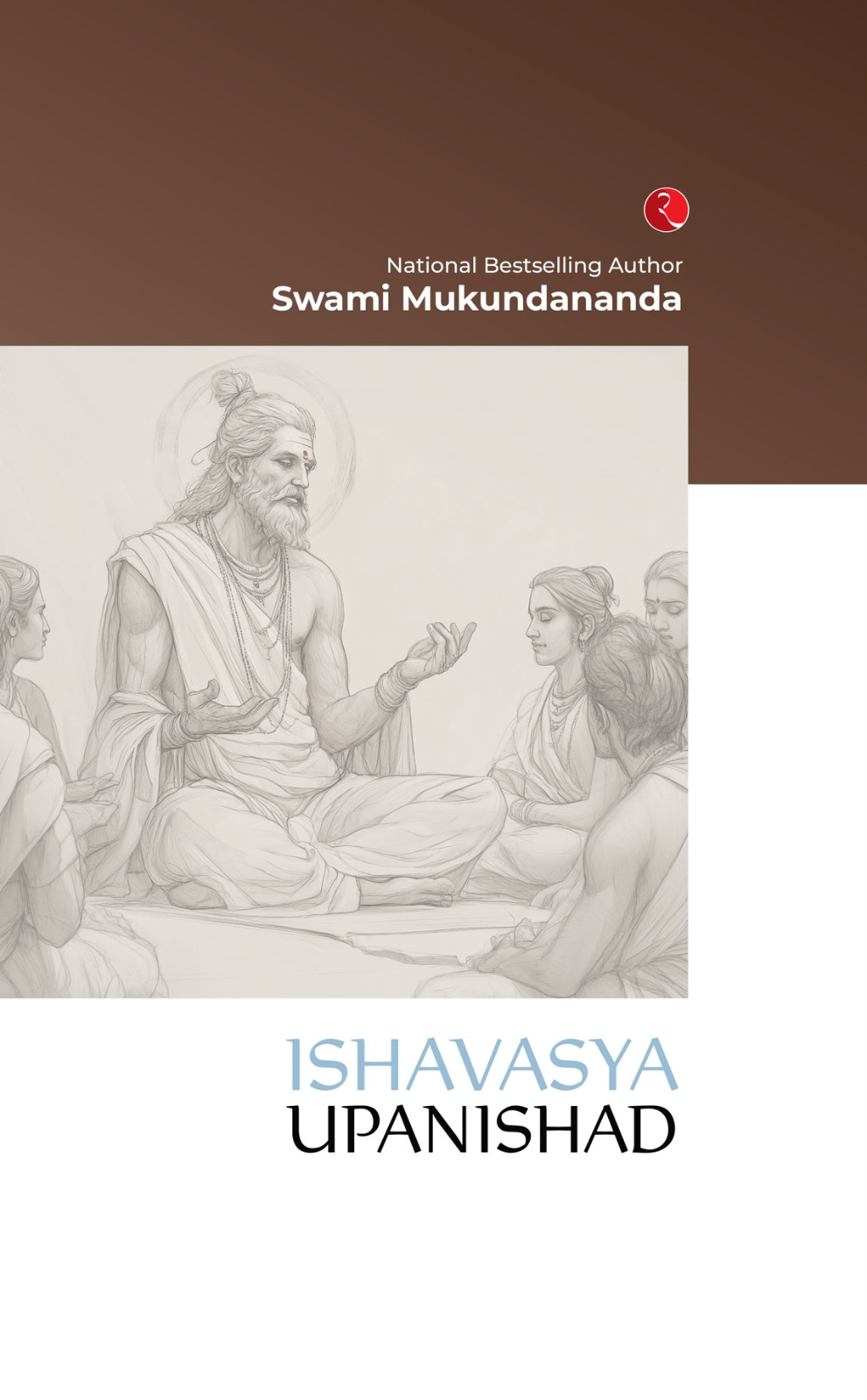
Swami Mukundananda’s Ishavasya Upanishad is much more than a translation of one of Hinduism’s shortest Upanishads. It is an in-depth philosophical commentary that connects the timeless wisdom of the Vedic tradition with the realities and challenges of contemporary life. Although the original text comprises only eighteen mantras, the author expands them into nearly 190 pages of insightful discussion on spirituality, ethics, devotion, self-realization, and the pursuit of inner peace. Rather than offering a literal translation of the Sanskrit verses, he unpacks their deeper philosophical meaning through references to other scriptures, logical analysis, practical illustrations, and relatable modern examples.
One of the book’s greatest strengths lies in its treatment of the Ishavasya Upanishad itself. Despite its remarkable brevity, the Upanishad is regarded as one of the most profound texts in Vedantic philosophy. Swami Mukundananda demonstrates that its concise form conceals extraordinary depth, using each mantra as a gateway to explore fundamental concepts such as the nature of the Supreme, the soul, karma, detachment, devotion, and the path to liberation. His detailed exposition transforms these brief verses into a comprehensive guide for both philosophical inquiry and practical spiritual living.
One of the book’s most impressive accomplishments is its ability to relate the timeless wisdom of the Ishavasya Upanishad to the challenges of contemporary life. Throughout the commentary, Swami Mukundananda demonstrates how the text’s teachings remain relevant to modern issues such as materialism, consumerism, environmental responsibility, ethical decision-making, stress management, and the pursuit of lasting happiness. By drawing meaningful connections between ancient philosophy and present-day experiences, he shows that the Upanishadic worldview continues to offer practical insights for navigating the complexities of modern society.
Rather than presenting the Upanishads as historical or purely religious documents, Swami Mukundananda portrays them as living philosophical guides capable of addressing universal human concerns. The emphasis on detachment, responsible stewardship, selfless action, and inner fulfillment is consistently linked to the realities of contemporary life, making the commentary both intellectually engaging and practically relevant. This successful integration of classical wisdom with modern concerns is one of the book’s defining strengths and significantly enhances its appeal to today’s readers, whether they approach the text from an academic, philosophical, or spiritual perspective.
Structure of the Book
One of the book’s most significant strengths lies in its well-crafted introductory chapters. Before presenting the commentary on the eighteen mantras, Swami Mukundananda devotes considerable attention to explaining the nature of the Upanishads, their enduring relevance, and their place within the broader framework of Vedic literature. This introductory discussion provides readers with the philosophical foundation necessary to appreciate the deeper meanings of the text. As he explains:
“The Upanishads reveal the nature of the Absolute Truth. They help us solve the mystery of life and creation. Who are we? Why are we on this planet?”
This statement immediately establishes the book’s philosophical scope. Rather than treating the Upanishads solely as religious scriptures, Swami Mukundananda presents them as timeless explorations of consciousness, existence, and the ultimate nature of reality. By framing the text around universal human questions, he makes its teachings relevant to both spiritual seekers and readers interested in philosophy.
Another noteworthy feature is the systematic introduction to key concepts of the Vedic worldview. Before examining the individual mantras, the author explains foundational ideas such as Brahman (the Supreme Reality), Atma (the individual soul), Paramatma (the Supreme Soul), Maya (illusion), Karma (the law of action and consequence), and Yoga (the path to spiritual realization). This structured approach ensures that readers are equipped with the conceptual background needed to understand the commentary, making the book accessible even to those with little or no prior exposure to Hindu philosophy.
Introducing the Upanishadic Tradition
The discussion on the transmission of Vedic knowledge is particularly engaging and provides valuable context for understanding the Upanishadic tradition. Swami Mukundananda explains that the term Upanishad is not merely the title of a sacred text but reflects the traditional method through which spiritual wisdom has been imparted across generations. As he notes:
“Upa means ‘to go close’ and niṣhad means ‘to sit’. Hence, the word Upanishad implies ‘knowledge gained at the feet of the guru’.”
This explanation emphasizes that the Upanishads are rooted in an experiential teacher-disciple tradition, where knowledge is transmitted through close guidance, dialogue, and personal realization rather than through intellectual study alone. By highlighting this relationship, the author underscores the importance of lived experience and mentorship in the pursuit of spiritual understanding.
The introductory chapters also examine the four inherent limitations of human knowledge—imperfect perception, illusion, the propensity to make mistakes, and the tendency to deceive. According to Swami Mukundananda, these limitations explain why Vedic revelation occupies a unique position within Hindu philosophy, serving as a source of knowledge that transcends the constraints of ordinary human reasoning. This discussion not only strengthens the philosophical foundation of the commentary but also prepares readers to appreciate why the Upanishads are regarded as authoritative texts for understanding ultimate reality.
Philosophical Foundations of the Commentary
The commentary opens with the celebrated Shanti Path (Peace Invocation), which establishes the philosophical tone for the entire work:
“The Supreme Brahman is perfect and complete. This world, having emanated from Him, is also complete.”
From this concise invocation, Swami Mukundananda develops an extensive discussion on the nature of divine perfection and the completeness of creation. One of the most compelling aspects of this section is his use of mathematical analogies involving the concept of infinity to explain how the Supreme remains complete even after manifesting infinite universes. By drawing on familiar logical concepts to clarify profound metaphysical ideas, the author makes complex Vedantic philosophy more accessible to readers who may have little prior exposure to the subject.
The commentary also addresses one of philosophy’s most enduring questions: if God is perfect and compassionate, why does suffering exist? Rather than avoiding the issue, Swami Mukundananda argues that adversity plays a meaningful role in spiritual evolution. He illustrates this perspective through the analogy of a mother eagle pushing her young out of the nest, explaining that what initially appears harsh is ultimately an act of compassion that enables the fledglings to develop the strength needed to fly independently. In the same way, he suggests that the trials and hardships of life serve as opportunities for the soul’s growth, resilience, and eventual spiritual realization.
The Message of the First Mantra
The commentary on the opening mantra constitutes the philosophical core of the book, laying the foundation for many of the themes explored throughout the subsequent chapters. Swami Mukundananda begins with the central declaration:
“All of creation, whether sentient or insentient, is pervaded by God.”
Building upon this verse, he presents a practical interpretation of renunciation that differs from the common perception of abandoning worldly life. Rather than advocating withdrawal from society or the rejection of material possessions, Swami Mukundananda argues that true renunciation lies in freedom from possessiveness and attachment. Material objects are not portrayed as obstacles in themselves; instead, it is the egoistic sense of ownership and excessive attachment to them that hinders spiritual growth. This balanced perspective makes the Upanishadic teaching particularly relevant for contemporary readers striving to reconcile professional responsibilities, family commitments, and spiritual aspirations.
The author further explains that human beings are not absolute owners of worldly possessions but temporary caretakers entrusted with the resources of creation. Since everything ultimately belongs to the Divine, wealth, nature, and material assets should be used responsibly, ethically, and in the spirit of selfless service. From this principle, Swami Mukundananda develops broader reflections on ethical living, environmental stewardship, and social responsibility, demonstrating how the philosophical insights of the Ishavasya Upanishad continue to offer practical guidance for addressing modern moral and societal challenges.
Knowledge and Devotion as Complementary Paths
One of the commentary’s defining characteristics is its successful integration of jnana (knowledge) and bhakti (devotion). Unlike many philosophical works that focus primarily on abstract metaphysical inquiry, Swami Mukundananda consistently argues that intellectual understanding alone is incomplete unless it culminates in devotion to the Divine. Throughout the commentary, knowledge is presented not as an end in itself but as a means of deepening one’s spiritual relationship with God.
This perspective is succinctly expressed in the following statement:
“True knowledge is that which helps us develop love for God.”
By emphasizing the complementary nature of reason and devotion, Swami Mukundananda avoids presenting philosophy as a purely intellectual exercise. Instead, he portrays self-realization as a transformative process in which wisdom naturally inspires humility, surrender, and divine love. This harmonious synthesis of jnana and bhakti remains a recurring theme throughout the book and is one of its most distinctive features. For readers interested in the devotional tradition of Vedanta, this balanced approach offers both philosophical depth and practical spiritual guidance, making the commentary accessible to scholars and spiritual seekers alike.
Presentation and Writing Style
The book is thoughtfully organized and exceptionally reader-friendly, reflecting a clear pedagogical approach that caters to both newcomers and experienced students of Vedantic philosophy. Each mantra follows a consistent and systematic structure comprising:
- The original Sanskrit text
- Transliteration
- Word-by-word meanings
- English translation
- Detailed philosophical commentary
- A “For the Scholars” section, where appropriate, offering deeper textual and doctrinal insights
- Transitional notes that connect one mantra to the next and maintain the continuity of the philosophical discussion
This well-defined format enables readers to engage with the text progressively, whether they are approaching the Ishavasya Upanishad for the first time or undertaking a more advanced study. The inclusion of linguistic, philosophical, and interpretative elements within each chapter ensures that the commentary functions as both a learning resource and a reference work.
Swami Mukundananda’s writing style is another of the book’s notable strengths. Although the commentary addresses complex metaphysical and theological concepts, the language remains clear, engaging, and accessible throughout. He frequently employs illustrations drawn from mathematics, parenting, education, technology, and everyday life to clarify abstract philosophical ideas without oversimplifying them. These relatable examples help bridge the gap between ancient Vedantic teachings and the experiences of modern readers, making the text intellectually stimulating while remaining easy to follow.
Use of Scriptural Sources
Another notable strength of the commentary is its firm grounding in the broader Vedic tradition. Throughout the book, Swami Mukundananda supports his interpretations by drawing extensively on authoritative Hindu scriptures, including the Bhagavad Gita, Shrimad Bhagavatam, Rig Veda, Vishnu Purana, Varaha Purana, Manu Smriti, and numerous other classical texts. These cross-references demonstrate that his commentary is not presented as an isolated personal interpretation but as part of a long-standing scriptural tradition in which philosophical ideas are understood through dialogue with related sacred literature. This intertextual approach enhances both the scholarly credibility and theological depth of the work.
The commentary also broadens its intellectual scope by incorporating observations from prominent Western philosophers, scholars, and literary figures such as Arthur Schopenhauer, Max Müller, Erwin Schrödinger, Friedrich Schlegel, and T. S. Eliot. By referencing thinkers who were deeply influenced by Indian philosophy, Mukundananda highlights the universal appeal and enduring relevance of the Upanishads beyond their cultural and religious origins. These comparative perspectives enrich the discussion, demonstrating how the philosophical insights of the Ishavasya Upanishad have inspired intellectual inquiry across different traditions and historical periods.
Strengths of the Commentary
The book possesses numerous strengths that distinguish it from many contemporary introductions to the Upanishads. Foremost among these is its exceptional accessibility. Swami Mukundananda succeeds in presenting profound philosophical concepts in language that is clear, engaging, and easy to understand without diluting their intellectual depth. The extensive introductory chapters provide readers with the historical, philosophical, and theological background necessary to approach the commentary with confidence, making the text suitable for both beginners and more experienced students of Hindu philosophy.
Another major strength is the seamless integration of philosophy and devotion. Rather than portraying jnana (knowledge) and bhakti (devotion) as separate or competing paths, Swami Mukundananda demonstrates how genuine spiritual understanding naturally culminates in devotion, while devotion deepens philosophical insight. This balanced perspective gives the commentary a distinctive character that appeals to both intellectually inclined readers and spiritual practitioners.
The book’s educational value is further enhanced by its thoughtful organization, practical illustrations, comprehensive glossary, and extensive scriptural cross-references. Everyday analogies and contemporary examples help clarify abstract Vedantic concepts, while the consistent presentation of each mantra encourages systematic study. Together, these features make the commentary not only an insightful philosophical work but also an effective learning resource for readers seeking a deeper understanding of the Ishavasya Upanishad.
Limitations
Despite its many strengths, the commentary is not without certain limitations. One of its most noticeable characteristics is its consistent interpretation of the Ishavasya Upanishad through the lens of the Vaishnava devotional tradition. While Swami Mukundananda occasionally acknowledges other schools of Vedanta, such as Advaita and Vishishtadvaita, these perspectives receive comparatively limited attention. As a result, readers seeking a comprehensive comparative analysis of the major Vedantic traditions may find the discussion somewhat selective in its theological orientation.
Another limitation is the recurring emphasis on a number of central themes, particularly God’s omnipresence, detachment, divine ownership, selfless service, and devotion. Although this repetition reflects the interconnected and cyclical nature of the Upanishadic teachings, certain discussions revisit similar ideas with only minor variations. A more concise treatment in some sections could have improved the overall pace of the commentary without diminishing its philosophical message.
The commentary also expands far beyond the scope of the original eighteen mantras, transforming a remarkably concise philosophical text into an extensive theological exposition. While this detailed approach enables readers to explore the broader implications of each verse and appreciate its connections with other scriptures, there are occasions when the extended discussions temporarily overshadow the simplicity, brevity, and poetic elegance that characterize the Ishavasya Upanishad itself. Readers who prefer a more text-centered or philological commentary may therefore find the interpretative sections more expansive than expected.
Conclusion
Swami Mukundananda’s Ishavasya Upanishad is an impressive synthesis of scriptural commentary, philosophical reflection, and practical spiritual guidance. Expanding upon one of Hinduism’s shortest yet most profound sacred texts, the author transforms its eighteen mantras into a comprehensive exploration of God, the individual soul, creation, devotion, ethical living, and the path to self-realization. Although the commentary is firmly rooted in the Vaishnava devotional tradition and does not engage equally with all schools of Vedanta, it nevertheless offers a thoughtful, intellectually rigorous, and highly accessible interpretation of the Upanishadic worldview.
The book’s greatest strengths lie in its lucid explanations, extensive use of scriptural references, effective employment of contemporary examples, and its ability to demonstrate the continuing relevance of ancient Vedic wisdom in addressing modern concerns. By integrating philosophical inquiry with devotional practice, Swami Mukundananda presents the Ishavasya Upanishad not merely as a text for scholarly study but as a practical guide for ethical living and spiritual growth. While occasional repetition, theological selectivity, and extended digressions may reduce the pace of the commentary in certain sections, these are relatively minor shortcomings in comparison with its overall depth and educational value.
For readers seeking a devotional yet intellectually substantial introduction to the Ishavasya Upanishad, this work ranks among the most comprehensive modern commentaries available. It succeeds not only in illuminating the philosophical richness of the original text but also in encouraging readers to reflect on its enduring message; that the Divine pervades all existence, and that lasting fulfillment is attained through self-knowledge, detachment, righteous action, and loving devotion. As both an accessible guide for newcomers and a rewarding resource for serious students of Vedantic philosophy, the book makes a valuable contribution to contemporary interpretations of one of Hinduism’s foundational scriptures.